
Industrial Tubing vs. Fabricated Boots: Choosing the Right Material Transfer Solution
When material handling systems fail, the problem is often at the transfer point. The right component can improve flow, reduce wear, and cut downtime. Two solutions that are often discussed together—but serve very different purposes—are industrial tubing and fabricated boots. Industrial tubing is best for continuous, uniform transfer lines. Fabricated boots are custom-shaped connectors and abrasion-resistant components built for transitions, chute work, and other demanding wear areas. Choosing correctly helps buyers, maintenance managers, OEMs, and engineers get better performance from the entire system.
What Industrial Tubing Is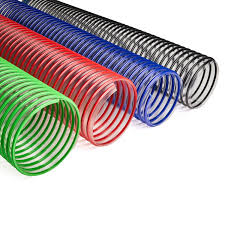
Industrial tubing is a standardized product used to move air, fluids, and process media through a continuous run. Common materials include polyurethane, polyethylene, nylon, rubber, neoprene, vinyl, and PTFE. Its value comes from consistency: uniform dimensions, flexible routing, and easy integration with standard fittings. That makes industrial tubing a strong choice for pneumatic lines, suction and transfer service, fluid movement, and other applications where a straight or gently routed path is needed.
Tubing works best when the transfer path is uniform. It is efficient, readily available in standard sizes, and easy to replace. Its limitations show up when equipment geometry becomes irregular. Square-to-round transitions, offset connections, and severe abrasion zones usually require a custom solution rather than a standard tube.
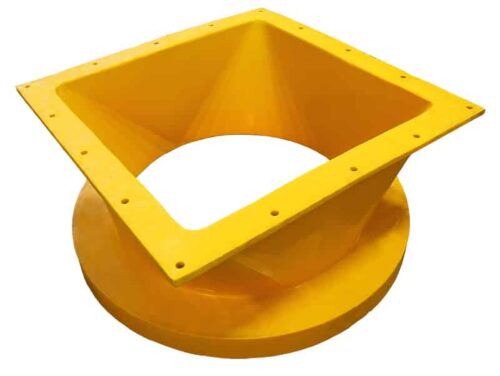 What Industrial Fabricated Boots Are
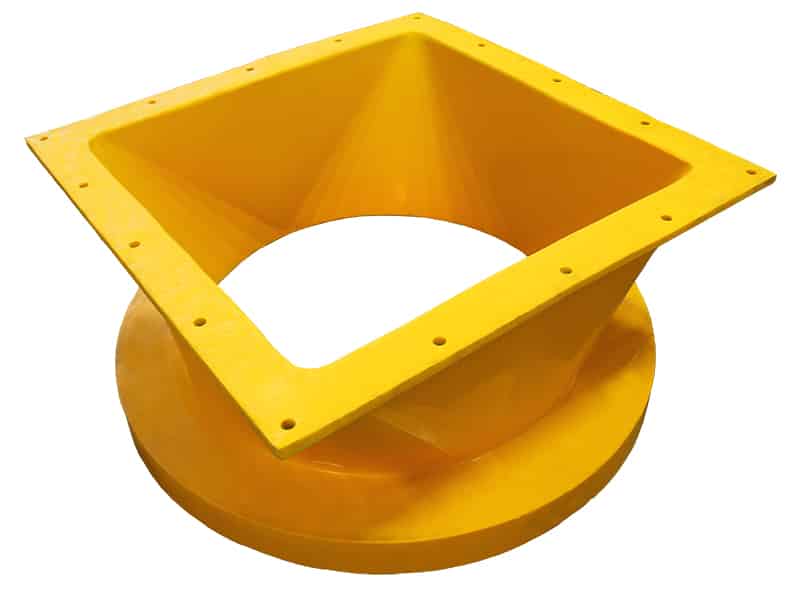
Fabricated boots are custom industrial fabrication components designed for places where standard tubing will not work. These engineered rubber or urethane parts are used for material transfer solutions such as chute transitions, hopper connections, flexible drop points, and sealing interfaces. Unlike tubing, fabricated boots are built to match the equipment, whether that means round-to-square, tapered, offset, flanged, or reinforced designs.
Fabricated boots can be made from rubber, urethane, or specialty materials based on the environment. Rubber boots (industrial) are commonly used where flexibility and sealing are important. Urethane boots are often selected for wear life in abrasive service. Their main advantage is customization: they solve fit, flow, and abrasion problems in high-wear areas. The tradeoff is that they must be designed for the specific application.
Key Differences Between Tubing and Fabricated Boots
The difference comes down to function. Industrial tubing is a continuous, flexible line used for standardized transfer. Fabricated boots are custom-shaped connectors used to handle transitions, movement, impact, and concentrated wear. Tubing is ideal for straight runs, suction, and fluid movement. Fabricated boots are better for chutes, hoppers, equipment transitions, and abrasion-resistant components at material drop points.
When to Choose Tubing vs. When to Choose a Fabricated Boot
Choose industrial tubing when you need a repeatable, flexible line with a consistent cross-section and standard fittings. Choose fabricated boots when the application involves mismatched openings, chute transitions, vibrating equipment, sealing needs, or heavy wear. If the challenge is routing a uniform transfer line, tubing is likely the answer. If the challenge is geometry, impact, or abrasion, a fabricated boot is usually the better long-term solution.
Common Industries and Applications
Both solutions are used in aggregate, mining, cement, agriculture, food processing, chemical processing, power generation, and general manufacturing. Industrial tubing is common in fluid, air, and light material transfer. Fabricated boots are often used at conveyor discharge points, bin and hopper outlets, chute transitions, and other high-wear areas where standard products fall short.
How Thaman Rubber Supports Both Solutions
Thaman Rubber Co. provides both standardized industrial tubing and custom-fabricated boots for demanding material handling applications. That includes tubing in a wide range of materials, along with custom industrial fabrication in rubber, urethane, and specialty compounds. By matching the material and design to the application, Thaman helps customers improve reliability, reduce wear, and solve transfer challenges more effectively.
Talk to Thaman Rubber About the Right Fit
Need help choosing between industrial tubing and fabricated boots? Contact Thaman Rubber for tubing recommendations or custom fabrication support for your material transfer application.