
Hose Safety: Products and Practices for Safer Hose Assemblies
Hose assemblies are essential to many industrial operations. They transport air, water, chemicals, hydraulic fluids and other materials across a wide range of pressures and temperatures. Because hoses can operate under significant pressure and demanding conditions, selecting the appropriate hose safety products is an important part of protecting employees, equipment and the hose assembly itself. Hose safety goes beyond selecting a single restraint or protective device. Proper hose selection and coupling compatibility are important first steps. Assembly, installation, routing, inspection and maintenance also play an important role in safe hose operation.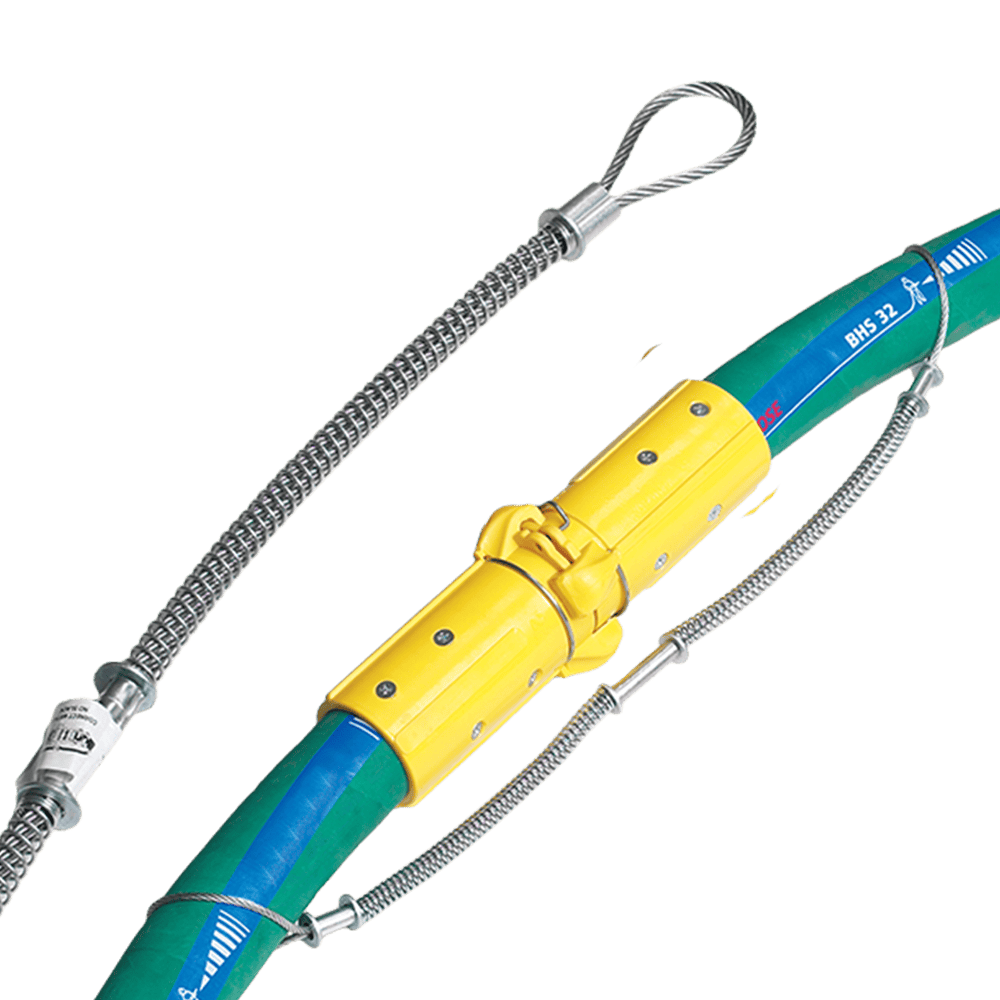
Whip Prevention and Restraints
One of the most important considerations when working with pressurized hose assemblies is preventing dangerous movement if a connection fails. Hose restraints and safety devices can help limit hose movement and reduce the potential for injury or equipment damage.
Whipchecks and Safety Cables
Whipchecks, also known as safety cables, provide secondary restraint across hose-to-hose or hose-to-tool connections. If a coupling or connection fails, the restraint can help limit hose movement.
Hose Halters and Nylon Chokers
Hose halters and nylon chokers are flexible, high-strength restraints that help secure hose assemblies and control movement if an accidental uncoupling occurs. These products are commonly used when a flexible restraint is preferred.
Whip Stops and Safety Straps
Whip stops and safety straps use mechanical clamps, anchor points or other restraint methods to secure a pressurized hose assembly to a fixed structure or another secure point. The appropriate restraint depends on the hose, connection, application and operating conditions. For additional information about hose restraints and safe practices, resources from manufacturers such as Parker Hose Products and Dixon provide additional guidance.
Abrasion and Environmental Protection
Hose assemblies often operate in environments where they are exposed to abrasion, heat, UV rays, sharp edges, crushing forces and other conditions that can contribute to premature wear. Protective products can help shield the hose from these hazards and support a longer service life when properly selected for the application.
Spiral Guard and Protective Sleeves
Spiral guards and protective sleeves provide an additional layer of protection around the hose. They can help reduce damage caused by abrasion, external impact and contact with surrounding equipment or surfaces. The appropriate material and construction should be selected based on the hose, application and environmental conditions.
Firesleeves and Heat-Resistant Covers
Firesleeves and heat-resistant covers are designed for applications where hose assemblies may be exposed to elevated temperatures, radiant heat or potential heat sources. In addition to helping protect the hose from thermal exposure, certain protective covers can help reduce personnel exposure to hot hose surfaces.
Spring Guards
Spring guards provide additional support and protection around a hose, particularly near the ends of an assembly. Their coiled construction can help reduce sharp bending and kinking while also providing protection against abrasion and contact with surrounding surfaces.
Flow Control and Disconnection Safety
Safety considerations also extend to the way hose assemblies are connected and disconnected.
Safety Breakaway Couplings
Safety breakaway couplings are designed to separate when a predetermined tensile load is reached. Depending on the design, they can also help control or shut off the flow of media. These couplings can be useful in applications where equipment movement or accidental pull-away could place excessive force on a hose assembly.
Dry-Break and Dry-Disconnect Couplings
Dry-break and dry-disconnect couplings are designed to minimize fluid loss during connection and disconnection. They can be particularly valuable when controlling spills, exposure or product loss is important.
Hose Safety Starts With Proper Selection
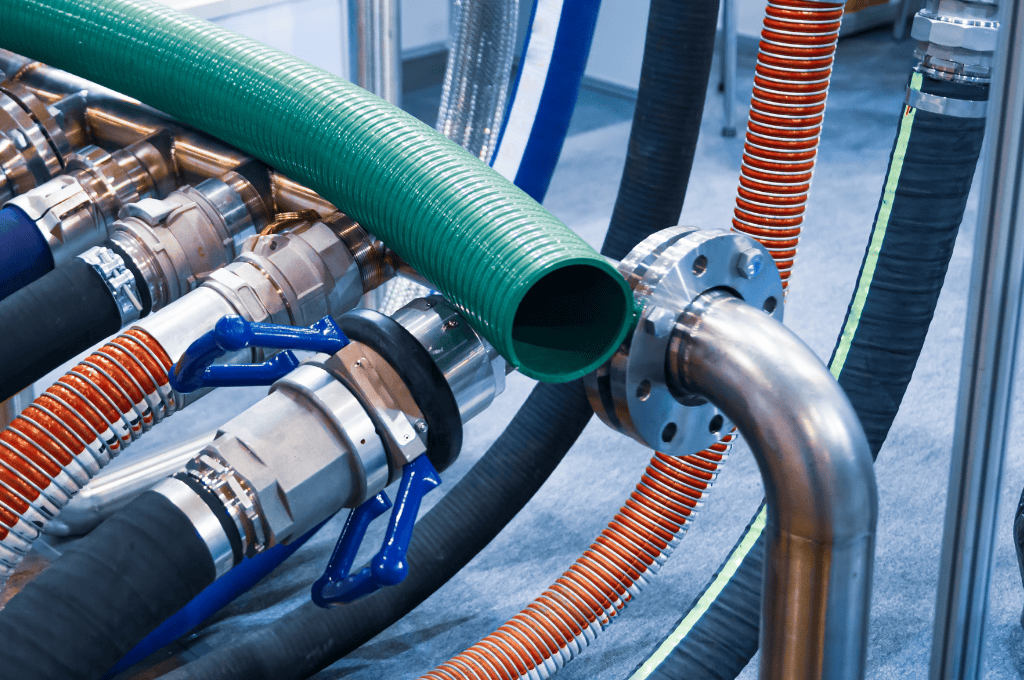
Safety products are only one part of a safe hose assembly. The hose, coupling, connection method and protective accessories all need to be appropriate for the application.
A useful framework for evaluating hose requirements is the STAMPED process. It considers:
- S — Size
- T — Temperature
- A — Application
- M — Media
- P — Pressure
- E — Ends
- D — Delivery
These factors can help identify the appropriate hose and connection components before an assembly is put into service. The NAHAD Hose Safety Institute provides additional industry resources covering hose selection, assembly, testing, installation, routing, maintenance and other aspects of hose safety.
Installation, Inspection and Maintenance
Even the right hose and safety products need to be properly installed and maintained. Hose routing, bending radius, connection orientation, cleanliness, storage conditions and regular inspection can all affect hose performance.
Before putting a hose assembly into service, consider the manufacturer’s recommendations and applicable industry requirements. Hose assemblies should also be inspected regularly for signs of wear, abrasion, damage, leakage or other conditions that could affect safe operation.
When a hose assembly reaches the end of its service life or shows signs of damage, replacement should be evaluated rather than continuing to operate a compromised assembly.
Thaman Rubber Can Help With Hose Safety Solutions
At Thaman Rubber, we understand that choosing the right hose assembly involves more than finding a hose that fits. Our team works with customers to identify hose, coupling, protection and safety products suited to their specific application.
Thaman Rubber maintains a range of hose safety products and can manufacture or source additional products through our network of leading manufacturers. Whether you need hose protection, restraints, specialized couplings or a complete hose assembly, our team can help evaluate your requirements and identify a solution for your application.
Need help selecting the right hose or hose safety product? Contact Thaman Rubber to discuss your application and requirements.